Logging into a website is something most of us do without thinking. It’s routine—you open a page, type your details, and continue with whatever you were doing. Because it feels so normal, it’s also one of the easiest moments to overlook warning signs.
That’s exactly why login pages are often imitated.
This is where freebonus777 login safety starts to matter. Not in a complicated or technical way—but in a practical, everyday sense. The goal isn’t to make users suspicious of everything. It’s simply to help them notice when something doesn’t quite add up.
At first glance, a fake login page rarely looks fake. In fact, that’s the whole point. It may use the same colors, a similar layout, even familiar wording. Everything appears in place.
But if you pause for a moment, small inconsistencies often begin to surface.
Understanding Freebonus777 Login Safety
When we talk about freebonus777 login safety, we’re really talking about awareness before interaction.
Instead of assuming a page is legitimate just because it looks familiar, users take a second to observe:
- Does the page behave normally?
- Does the web address look exactly right?
- Does anything feel slightly off?
It’s not about overanalyzing. It’s about creating a small pause between seeing a page and acting on it.
That pause makes a difference.
Why Fake Login Pages Work So Well
If fake login pages were obvious, they wouldn’t work. Their effectiveness comes from how closely they mirror the real thing.
Most people rely on visual cues. If something looks right, it feels right. That’s where imitation becomes powerful.
Familiar Design
Logos, colors, and layouts are easy to copy.
Encouraging Quick Action
Login pages are designed for speed, not inspection.
Small, Easy-to-Miss Changes
A tiny domain difference is often enough—and often overlooked.
That’s why freebonus777 login safety focuses on small signals, not obvious warnings.
How People End Up on These Pages
Most users don’t intentionally visit unsafe pages. They arrive there indirectly.
- Through ads
- Via social media
- From forwarded messages
- Through redirects
Understanding how users land on unfamiliar pages is just as important as analyzing the page itself.
Signs That Something Isn’t Quite Right
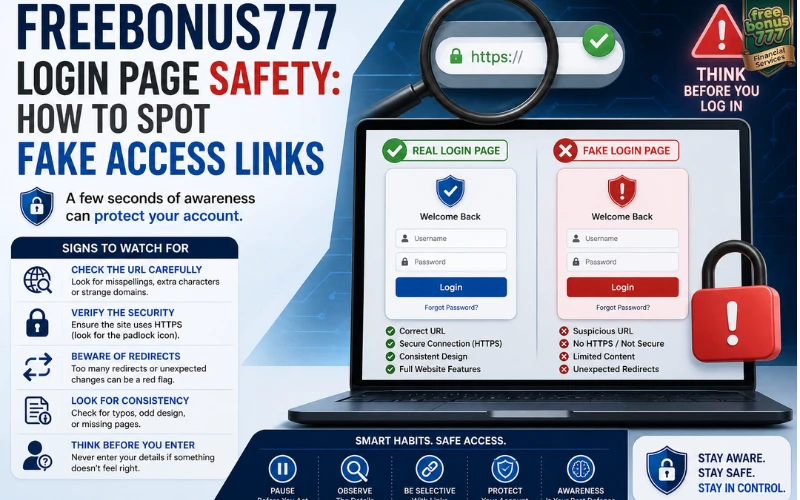
There’s rarely one obvious red flag. Instead, it’s a mix of small details:
- Slightly altered URLs
- Missing secure connection indicators
- Unexpected login prompts
- Limited navigation options
- Inconsistent or poorly written content
Each one alone may seem minor—but together, they matter.
Why Looks Can Be Misleading
A polished design can create a false sense of trust.
That’s why freebonus777 login safety goes beyond visuals. It encourages checking:
- The full domain name
- Page behavior
- Content consistency
If you want a broader understanding of how platforms present themselves and what to evaluate beyond login pages, you can review the official website structure and content flow as a reference point for comparison.
Because in many cases, the difference isn’t visual—it’s structural.
Redirects: When to Pay Attention
Not all redirects are harmful—but patterns matter.
Watch for:
- Multiple quick page jumps
- Changing domains
- Unexpected final destinations
These signs suggest the path wasn’t straightforward.
Simple Habits That Help Protect Your Account
You don’t need advanced tools. Small habits go a long way:
- Pause before interacting
- Read the full URL carefully
- Avoid unclear or unfamiliar links
- Observe page behavior first
- Use consistent access methods
If you’re also downloading files or mobile apps, similar caution applies. This is explained further in this APK safety review guide. which highlights what to check before installing anything unfamiliar.
Over time, these habits become automatic.
Why Slowing Down Matters More Than You Think
Most mistakes happen not from lack of knowledge—but from routine.
Login pages are designed to feel familiar and fast.
Taking just a few extra seconds helps you:
- Notice inconsistencies
- Question unexpected behavior
- Avoid entering sensitive information too quickly
It’s a small adjustment with a real impact.
Developing Awareness Over Time
The more you pay attention, the easier it becomes.
You’ll start noticing:
- Subtle layout differences
- Unusual navigation flow
- Incomplete or inconsistent content
Eventually, these things stand out naturally.
That’s the real goal of freebonus777 login safety—awareness without overthinking.
Looking at the Bigger Picture
Login safety is just one part of a broader online experience.
Every day, users interact with:
- Multiple platforms
- Different sources
- Various types of links
Understanding how to evaluate these interactions leads to a more stable and secure browsing experience.
Conclusion
Most login pages look trustworthy—and that’s exactly why they’re easy to overlook.
The idea behind freebonus777 login safety is simple:
observe first, act second.
By paying attention to small details—like URLs, page behavior, and how you arrived—you reduce the risk of interacting with misleading pages.
Frequently Asked Questions (FAQs)
It refers to understanding how to identify legitimate login pages and avoid fake or misleading access links.
Look for unusual URLs, missing security indicators, redirects, and inconsistent content.
They often copy branding, layout, and structure to appear familiar and reduce suspicion.
Not always, but multiple or unclear redirects can be a warning sign.
Take a moment to verify the page, observe its behavior, and avoid acting too quickly.